
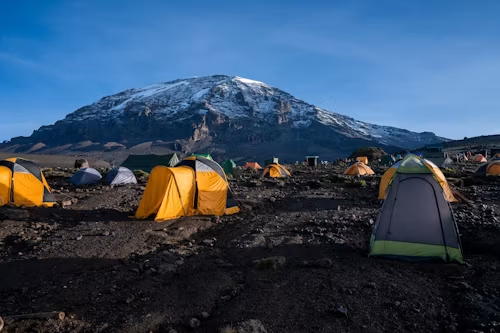
The trip to Everest Base Camp Trek is the dream of many adventurers, but in a time when there is an increasing number of trekkers to Everest, the need to protect the natural beauty of the Himalayas is more important than ever. Sustainable trekking is no longer a choice as much as it is a necessity. Knowing how to trek to Everest Base Camp responsibly means this incredible trail will remain unspoiled for generations to come. When you adhere to Leave No Trace guidelines and make a few eco-friendly choices, you can reduce the impact of your trip on the earth, and even leave the place you visited better.
The Everest region (also known as the Khumbu Valley) is blessed with natural and cultural wonders. But the influx of feet has contributed pollution, erosion, ion, and waste management challenges. One of the best things trekkers can do is to minimize the amount of waste they produce. Bring reusable items — the water bottle with a filter, metal or bamboo utensils, and cloth bags — to avoid single-use plastics. Teahouses generally have bottled water and packaged snacks to sell, but these add to non-biodegradable waste along the trail. Choose boiled or treated water and support lodges that practice eco-friendly habits. Don’t carry in garbage and don’t bring stuff to trash — everything you bring, you take out with you.
Another important factor in your eco-friendly trekking is to pick the company for your trek carefully! Support local, ethical operators who pay their guides and porters the right wages, adopt environmentally responsible procedures, and give back to the community. Many of the companies are Nepali-owned and committed to protecting the region, and can provide genuine cultural experiences with less of an ecological footprint. A responsible company would follow Porter’s welfare standards, employ adequate waste disposal systems, and promote low-impact travel habits. Another aspect is to also respect local culture, as we should always limit our presence as much as possible, even in nature. Ask permission before taking photos, dress conservatively, and make an effort to learn a few words of Nepali or Sherpa to express gratitude.
Human faecal colonization is another emerging problem in the high Himalayas. Public toilets are scarce, and in much of the countryside, waste simply has a way of getting into water sources. Make use of the designated toilet facilities if and whenever possible. During emergency defecation, follow Leave No Trace principles — dig a small hole at least 200 feet from any water source and cover it completely. Use tissues and wipes packed out in a sealed bag. So while it may seem a hassle, these little actions keep the planet healthy.
Don’t stomp on trails, it causes erosion! The adage, “Take only memories, leave only footprints”, even when those were sloppy or rocky, is not too bad, since the damage you are avoiding is to vegetation and the land, which could produce landslides. Wildlife is to be viewed from afar. Feeding or getting close to animals not only alters their natural behavior but also puts both them and you at risk. Having a great time in the mountains without the loud music and yelling, without unnecessary noise pollution.
Sustainable trekking to Everest Base Camp is a matter of choice. Make every footfall purposeful — purposeful for the land, the people, and the culture that make his sanctuary what it is. As a steward of Leave No Trace ethics, you are part of the solution, rather than part of the problem. PETER DONTE You don’t just get to base camp — you protect base camp.
Why Eco-Friendly Trekking is Important in the Everest Region?
Everest Base Camp Sustainable trekking is crucial in the Everest region due to the increasing stress on its sensitive environment and on the cultural traditions of the Khumbu Valley. With more than 30,000 trekkers visiting Everest Base Camp each year, the environmental footprint is expanding — trail erosion, littering, and poor waste management have emerged as visible issues. What makes this place special — the unspoiled landscapes and the deep-rooted Sherpa culture — is also what makes it fragile. The thin mountain atmosphere and slow process of decomposition mean that waste can mar the landscape for decades; villages without the infrastructure to support mass tourism can’t absorb it on this scale with impunity. Opting to hike with a sustainable mindset is not a trend; it’s an obligation. Every traveler can help protect this iconic landscape. Being respectful of your surroundings means the trails stay beautiful, clean, and safe for others. It also, in turn, brings economic lifeblood to local communities, which rely on tourism to sustain their cultures and lifestyles. Sustainable trekking is not about doing less — it’s about doing more, and better. Whether by carrying reusable items in our packs, staying on marked trails, or with the operators we choose, your choices make a difference. When you’re committed to sustainability, you’re not only reaching base camp—you’re helping to protect it.
What are the Major Environmental Threats to the EBC Trail?
There are a number of hazards to the Everest Base Camp trail, the majority of which are the result of the huge increase in tourism. The most obvious is waste litter. Trekkers and climbers leave behind tons of plastic bottles, food wrappers, and trekking gear every year. They do not easily break down, particularly in cold, high-altitude locales. A more serious issue is the trail erosion from unnecessary foot travel, in established trails and people improvising shortcuts, as well as many human cutthroats cutting their routes through protected areas. This causes harm to flora, soil, and creates monsoon vulnerability for landslides. Moreover, the human waste, which is not disposed of properly, pollutes drinking water sources of the villagers as well as the trekkers, posing a health hazard to the public. At the same time, the growing use of wood for heating and cooking is also a factor in deforestation in regions where trees are already in short supply. He said such effects, over time, could damage the very environment people come to see. Trash: Carry out all of it, whether it is yours or not, do your duty, use portaloos, eco-friendly teahouses can make a difference, eco eco-friendly trekking companies undoubtedly do. The Everest region is UNESCO-protected land and a sacred homeland for the Sherpa people—it deserves to be treated with delicate, responsible care by anyone visiting. It begins with protecting it by being aware of the threats and vowing to do better.
How to Minimize Plastic Waste on the Trek?
Cutting down on trash on the Everest Base Camp Tour can begin with small shifts in packing and buying habits. Disposable plastic water bottles are one of the biggest contributors to plastic polluting the trails. As filtered/boiled water is available at most teahouses, it is sensible to have a portable reusable bottle with a filter (or water purification tablets). Many trekkers who buy packaged snacks, however, discard the wrappers as litter along the path. Instead, pack snacks from home in reusable containers or buy local food that comes without packaging to cut down on trash. Opt out of plastic-wrapped toiletries with solid soaps and shampoo bars.
In towns like Lukla to Namche Bazaar, there are eco-shops where you can refill essentials, pack eco-friendly products, and bring items to recycle. Best of UP a lunch is all about the desi design’ecer in you and to make it your perfect partner, pack a cloth bag, reusable uber bee that doesnt litter the soil with its sudden death, a tiffin box so that when you stop for a bite on the highway, or while wandering in the village and city markets of India, you can say No to plastics. Mounting evidence that teahouses are increasingly leaping on board with eco-initiatives, so try to find signs they are cutting out plastic and properly taking care of their waste. Each piece of plastic discarded has an impact. Your waste may seem small, but in a week or more of trekking, it accumulates. It will reduce your footprint by going plastic-free, and you will provide a positive example for other hikers on the trail.
What to Pack for an Eco-Friendly EBC Trek?
Packing for an eco-friendly Everest Base Camp trek doesn’t mean more gear — it means smarter choices. Begin with a sturdy reusable water bottle (ideally one with a built-in filter or purification system) to reduce your use of single-use plastic bottles. Carry your reusable utensils with you in your lightweight tiffin box and a cloth shopping bag to skip plastic cutlery and packaging as you eat at stalls or shop on the trail. Select biodegradable soap, toothpaste tablets, and solid shampoo bars that reduce packaging and chemical runoff into water sources.
Further, clothes should be layered and reusable, instead of fast fashion. Invest in high-quality gear that will last, either by purchasing second-hand or renting, which you can also do in Kathmandu if you don’t plan to use the gear again. To prevent misuse of a generator for electronic devices, a charger or power bank that uses solar energy is convenient. Pack a headlamp with rechargeable batteries, and skip the disposable kind. Bring a small dry bag or zip pouch for your waist to pack out used tissues, wrappers , and other trash. There are few disposal facilities on the trail, so it’s important to take everything back with you. With smart and sustainable packing, you can take your trek without so much baggage. Environmentally friendly gear can protect the Himalayas and also improve the experience.
How Do Teahouses Deal with Waste?
Teahouses on the Everest Base Camp trail are adopting green practices, although the degree of eco-sensitivity differs from village to village. Many of the family-owned teahouses in more popular stops such as Namche Bazaar, Tengboche, and Dingboche have begun instituting waste management guidelines, such as bins for non-biodegradable waste and a no-bottle policy, offering the option for refilling water (to be brought in reusable bottles) in place of selling plastic ones. Some provide solar-powered hot water and have electricity only during certain hours, but allow you to bring your water in reusable bottles and containers.
Everest Base Camp Hike Yet, waste management is difficult in the high mountains due to inadequate infrastructure. Without recycling plants or a system of drainage, most villages collect trash in an ad hoc fashion. Instead, waste must be burned, buried, or hauled back down the mountain, often by porters. That’s why it’s also important to minimize your waste. Today, some teahouses are trying to reduce single-use plastics, offering filtered or boiled water, and serving eco-friendly menus featuring locally sourced food to help reduce transport emissions. When selecting where to stay, search for teahouses that prominently display green certifications or sustainable operations. Not only does supporting these lodges reduce your footprint, but doing so also helps businesses working to preserve the region. They also raise awareness by inquiring about the companies’ policy on waste. Each night’s stay then becomes a small but significant contribution to sustainability.
What is the Role of the Local Community in Sustainable Trekking?
It is the local communities that form the cornerstone of responsible trekking in the Everest region. The Sherpa have called the Khumbu Valley home for centuries, and their close relationship to the land makes them natural custodians of its environment. When you use local businesses, such as hiring a Sherpa guide, staying in a family-owned teahouse, or purchasing handicrafts, you’re directly supporting the economy of the region. The monetary benefit encourages local citizens to protect their natural resources and culture.
Most villages have community-based conservation projects, including reforestation, eco-trail management, and plastic reduction schemes. Some schools go so far as to teach children about tourism’s effects on the environment and instill sustainable habits early on. Ethical trekking isn’t just about not harming, it’s about doing lasting good for the people who live in the places you’re heading.
You contribute to society and my culture if you discover the customs in my place, respect religious places, and engage in some sharing. Local participation in sustainable tourism also helps keep those decisions in line with their needs, and not just those of international trekking companies. By acknowledging the role of communities in environmental protection, you help transition tourism from a transactional relationship to a transformative, collaborative endeavor, ensuring the long-term sustainability of the industry.
Is It More Sustainable to Hire a Guide or Hike Alone?
Not only is hiring a guide or porter helpful, but it’s a significant step in the direction of sustainable trekking. Solo trekking may seem like an independent, low-impact way to travel, but it risks undermining the economic benefits local guides and porters bring back to their communities. Hiring a certified local guide means your budget stays in the region and directly supports families who have relatives involved in the trekking economy.
Everest Base Camp Trek Itinerary Guides also make your impact on the environment more superficial. They help you stay on established routes, out of restricted or sensitive habitats, and in line with Leave No Trace principles. They also know about green teahouses and nearby conservation efforts. A guide might even inspire some more considerate trekking, from picking up trash and eating local foods to knowing the culture’s dos and don’ts.
From a safety perspective, guided trekking can result in fewer emergency rescues, which are costly in both environmental and logistical terms. Although trekking solo is doable, even in the well-signed Everest region, the sustainable ripple effect is that much more potent if you travel with someone who knows the landscape and the culture and can protect it.
The logic: Hiring local isn’t just convenient — it’s an investment in sustainability. It gives power to communities, conserves the environment, and turns your adventure into a shared journey that lifts up everyone involved.
How Do You Dispose of Human Waste on the Trail?
Waste management of human faeces is becoming a big problem on the trail to Everest Base Camp, with the increasing number of trekkers each year. At lower elevations and more popular villages, teahouses have rudimentary BCs, most with either flush or pit toilets, and some even have composting BCs. That being said, as you go higher, particularly above Gorak Shep, amenities are very limited. Inadequate disposal of waste can contaminate water supplies, spoil the environment, and trigger disease.
To reduce your impact, consider using an established toilet where available. If nature beckons on the trail and no facilities are nearby, follow the guidelines of Leave No Trace guidelines. That entails digging a “cat hole” at least 6–8 inches deep and 200 feet away from water, trails, or campsites. Completely cover the waste and pack out soiled toilet paper or wipes in a sealed, odor-proof bag.
Everest Base Camp Trek Package Contemplate bringing wag bags, which are human waste disposal systems that are light, easy, and work well; if the land management agency for your hike doesn’t make them available, you can find them at most outdoor retailers. Some tour companies offer or promote these for the upper sections of the trek. Never leave waste on the surface or bury things that don’t decompose.
Be Prepared and Show Respect for Human Waste – An Inconsequential Act That Saves Lives in the Everest Region.
Best Seasons for Eco-Friendly Trekking to Everest?
The optimal seasons for an environmentally friendly trek to Everest Base Camp are spring (March to May) and autumn (September to November). It’s during these months that the trail conditions are the most stable and the skies are clearer, making them significantly safer in terms of both the wear and tear on the paths and the risk of having to call in emergency evacuations and over-extending the resources of local communities. At these peak hours, you’ll also stand a better chance of finding eco-conscious teahouses both open and fully staffed, so that it’s easier to make sustainable choices.
Hiking the trail in the monsoon months will make it more likely for you to slip on the mud and erode the trail. The winter (December–February) months are a lot quieter, but we all need to burn more fuel for heating and to add extra provisions that put even more pressure on resources.
One more positive aspect of trekking during peak season is the community-based environmental programs, including garbage collection and eco-awareness programs. You too can help by joining in these busy months. But even in the height of the season, it is important to behave responsibly. The high-volume traffic on the trail makes sustainable practices more essential than ever.
The selections of the season you pick have a broad-ranging effect beyond ensuring your safety and increasing your comfort level — it greatly diminishes your environmental impact and helps preserve the sustainability of the Everest trekking route.
How You Can Make Your Everest Trek a Force for Good
The process of turning your Everest Base Camp trek into a force for good is one of being and making intentional choices — from how you pack to who you support. Each decision along the seaboard has an impact on the environment, local economy, and cultural preservation. Start by selecting local trekking agencies that value fair wages, the well-being of guides and porters, and an eco-friendly approach to travel. Your money ought to empower the people whose communities you visit.
Dine in Nepali-run teahouses, purchase locally made souvenirs over mass-produced trinkets, and tip generously to support local businesses. Leave No Trace: Travelers should strive to be low impact, minimize waste, re-use gear, and make it better than they found it. Be respectful of traditional culture and connect with local people, for more than just photographs, for true dialogue.
You can also give back by going on a volunteer cleanup trek, donating to local environmental organizations, or even raising awareness about responsible travel when you return home. Share your route, but also share what you learned about living more sustainably.
EBC Trekking Done right, trekking Everest turns out to be more than an accomplishment for one — it’s an opportunity to give back to a land and people that make it possible. Be the trekker that future generations will thank by leaving a positive mark in the Himalayas.
How Many Days Do People Spend at Everest Base Camp?
The majority of trekkers spend barely any time at Everest Base Camp — about 30 minutes to a couple of hours. That’s because it’s not the sort of place where you’re supposed to be able to spend the night unless you’re on a climbing expedition. Standard trekkers turn around at EBC, which is the centerpiece and turnaround destination for the trek. After lingering long enough to revel in the views, snap some selfies, and congratulate themselves for making it, the vast majority of trekkers head back to Gorak Shep to spend the night, the closest stop with rudimentary accommodations.
Oxygen levels at base camp are about half those at sea level, and the altitude there is 5,364 meters (17,598 feet). Staying for an extended period at this elevation, without proper acclimatization, can lead to altitude sickness. That is why the time for those short visits is there for safety.
If you’re part of an Everest expedition team, you may spend several weeks to even two months at base camp during the climbing season (spring or fall), when climbers use it as a launching pad for summit attempts. They are in tented camps, with an organized logistical operation and with supplies flown in.
For trekkers, Everest Base Camp is more an altar than a place to linger, in which you contemplate, celebrate, and retreat safely. The experience is strong, perhaps even in an unforgettable few hours.
How Can I Get a View of Mount Everest Without Trekking?
For those who would rather not trek, there are a few other spectacular and easy options to view Mount Everest. The most popular of these is a scenic mountain flight from Kathmandu, which takes about an hour and offers stunning views of Everest itself and other giants of the Himalayas. The flights usually do morning runs when skies are clearer and offer window seats to all passengers. Many flights even offer a cockpit visit for a pilot ’ ‘ s-eye view of Everest.
Another unforgettable option is to take a helicopter trip to Everest Base Camp or Kala Patthar – for anyone longing for views without the pain. These spurts also usually include short stops at serene locations such as Syangboche (close to the Everest View Hotel), where you can have breakfast with a clear view of Everest.
For anyone who is up for a short hike, a reach of Namche Bazaar or a stay at Everest View Hotel (3,880 meters) provides stunning visual panoramas of Everest that require a bit less in the way of exhaustion than a full trek to base camp.
Though these are pricier, they’re great for people with a time crunch, mobility issues, or altitude fears. Getting a view of Everest doesn’t always mean a long trek — you just have to plan smart and know where to go.
When Is the Best Time for Everest Base Camp?
The ideal time of the year to trek to Everest Base Camp is during spring (March-May) and autumn (late September-November). These are regarded as the best trekking seasons as the weather is stable and moderate, mountains are clear.
Mount Everest Base Camp Tour Spring is a perfect time to admire the full-sized rhododendrons in bloom, and the Everest region is buzzing with activity as climbers make their final preparations to attempt to reach the summit. The weather is cool, and mornings are usually clear. It is also a good time for photography; Everest certainly looks spectacular in bright sunlight.
The fall (after the monsoon rains have fled) offers the crispest of air and clearest of skies (which is why it’s the most popular time to trek). The scenery is still green, the trails are dry, and visibility is at its best. It is cooler than in spring, but OK, handling the weather.
Heavy rain, leeches, and flight disruptions can make the June-August monsoon season less than ideal. Winter (December through February) can be serene and majestic, but superlative cold and snow on the trails can be hazardous to anyone not experienced.
Selecting the best season is down to personal preference, but for the perfect balance of safety, aesthetics, and experience, you can’t beat spring and autumn.
How Does Everest Base Camp Work?
Everest Base Camp (EBC) fulfills two very different roles depending on who’s coming to visit: trekkers or mountaineers. For trekkers, EBC is the endpoint of a two-week hiking trip through the Himalayas. It’s a bare, glacier-covered space at 5,364 meters (17,598 feet), with no permanent structures — only a monument set amid prayer flags, cairns, and signs. Trekkers don’t sleep at base camp, although in good weather it’s possible to go from Gorak Shep to the base camp by walking, or return from the Base Camp to Gorak Shep on the same day due to the high altitude risk of the base camp.
For climbers who come to climb the world’s highest summit, EBC is a logistics center and lodging area, employed for weeks during the climbing season (usually April–May). Climbing teams construct huge tent cities, including kitchen tents, communication equipment, medical setups, and storage for gear. Supplies are flown in or transported overland by porters and yaks. Teams acclimatize, plan, and rest at base camp before continuing rotations up the mountain.
Even if trekking to EBC is a non-technical walk, getting there is still challenging, and the appropriate precautions are advised. Whether you’re camping out for a photo or staying for a season, Everest Base Camp is both a destination and a jump-off point, demarking the edge between an epic adventure and the tallest pile of rock and snow on earth.
![Exploring the Rich Cultural Heritage of [Country/Region]](https://roadpiece.uk/wp-content/uploads/2026/01/beach-1236581_960_720.jpg "Exploring the Rich Cultural Heritage of [Country/Region]")

